Operating Models

The right operating model depends on maturity, leadership, and scale.

Pike’s Playbook defines multiple delivery models designed for different organizational maturity levels, production demands, leadership capabilities, and customer expectations.

Core operating principle

No one-size-fits-all model exists
Leadership maturity determines scalability
PM systems create operational discipline
Hybrid structures maximize flexibility
Operational clarity improves customer trust

Strategic idea

The operating model should evolve as the organization scales.

Model Selection Framework

Different models solve different organizational problems.

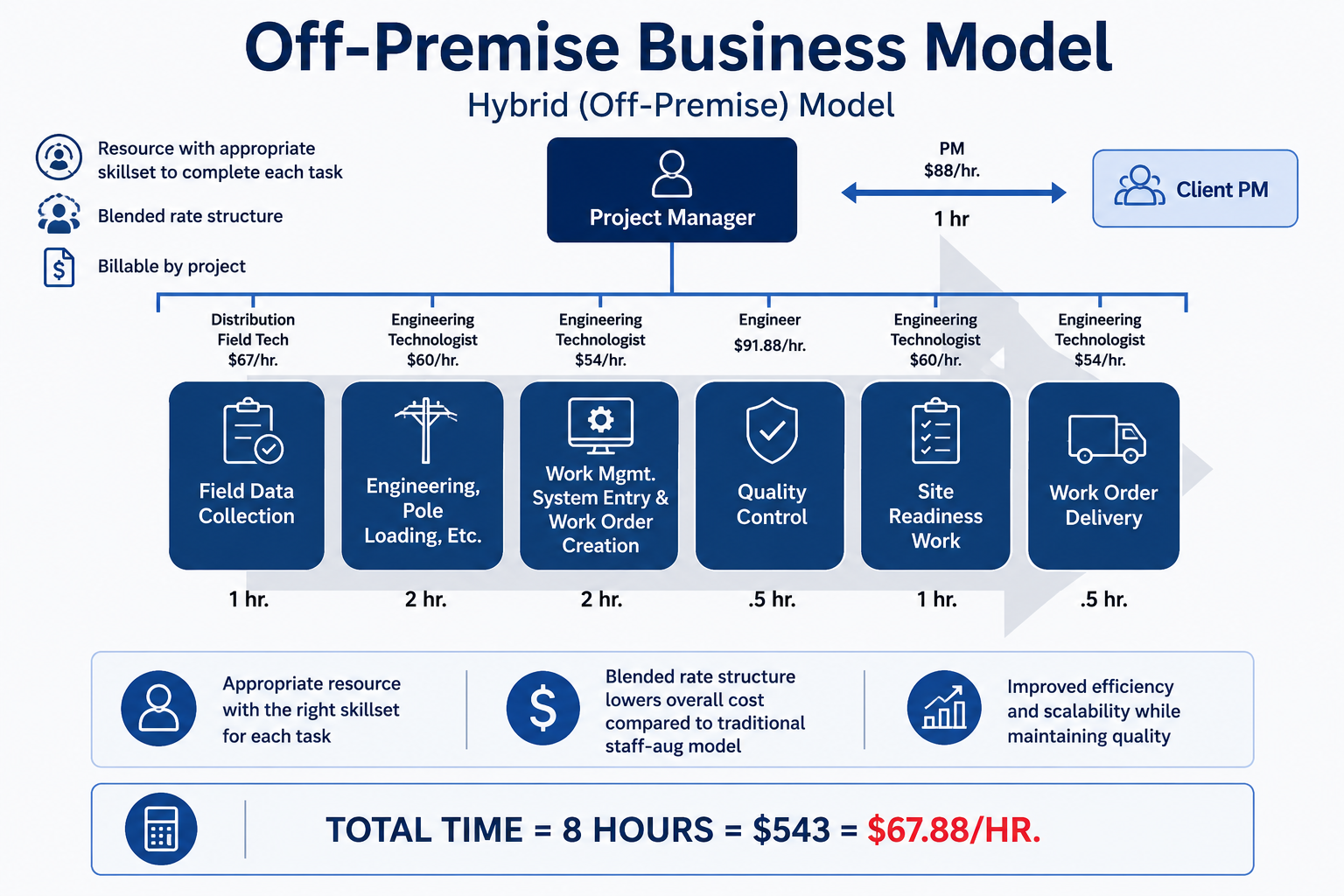
Pike’s framework defines when organizations should use Traditional, POD, or Hybrid operating models depending on maturity, staffing, technology, customer demands, and production complexity.

Distribution business model comparison
Pike differentiation strategy

Differentiation Strategy

Pike’s hybrid off-premise model creates flexibility and scale.

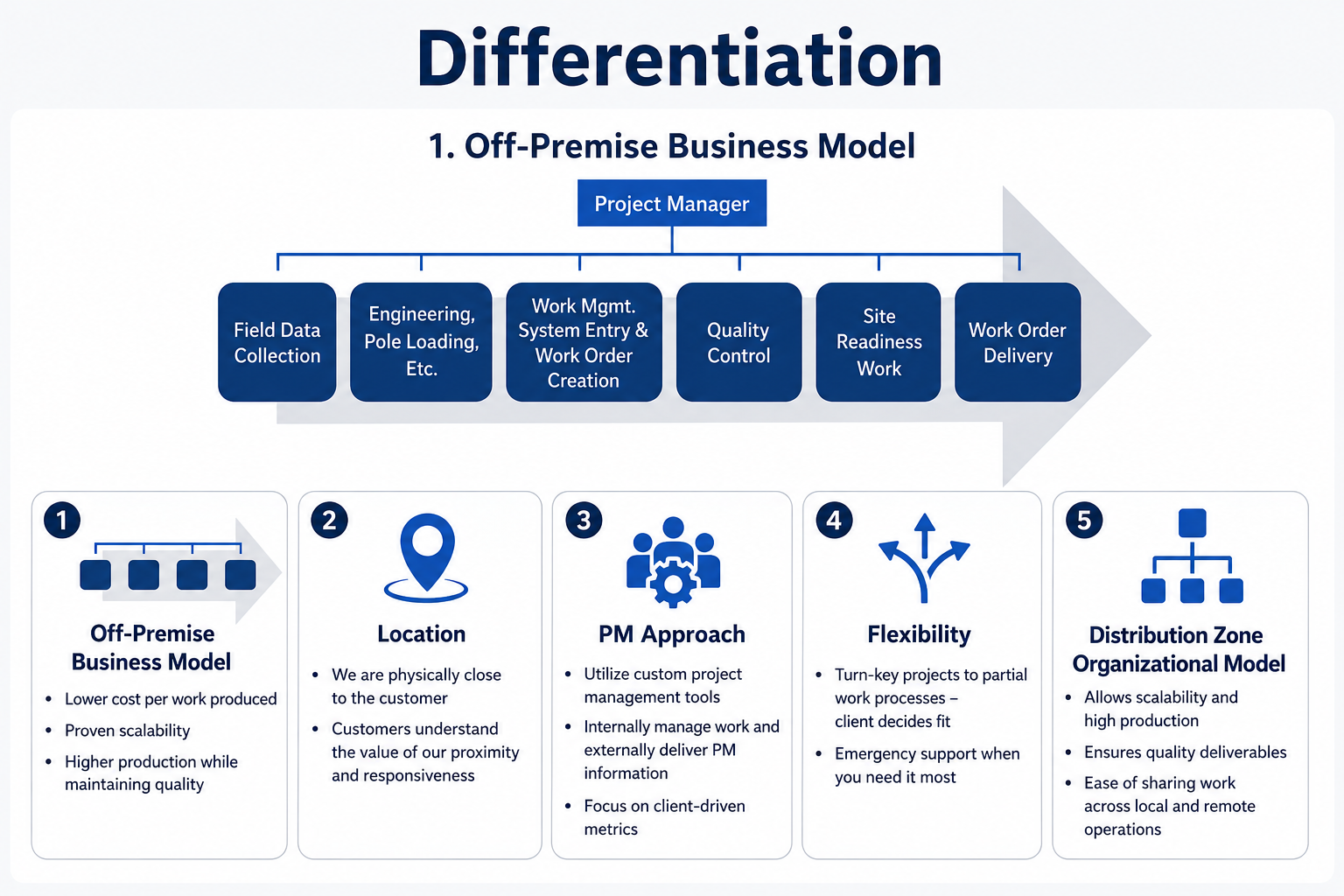
The Playbook positions Pike differently from traditional staffing approaches by combining scalable remote production capability, strong PM discipline, flexible deployment structures, and operational ownership models.

Off-premise business model

Creates scalable production with lower delivery cost.

PM-driven execution

Custom PM systems improve visibility, accountability, and customer communication.

Flexible deployment

Supports full turnkey programs or partial operational support.

Zone organizational model

Improves scalability, consistency, quality, and production sharing.

Operating Model Deep Dive

Each model creates value differently.

The right model depends on the type of work, team maturity, leadership capacity, PM discipline, and how much scalability the client requires.

Traditional Utility Model

Model Deep Dive

Traditional Utility Model

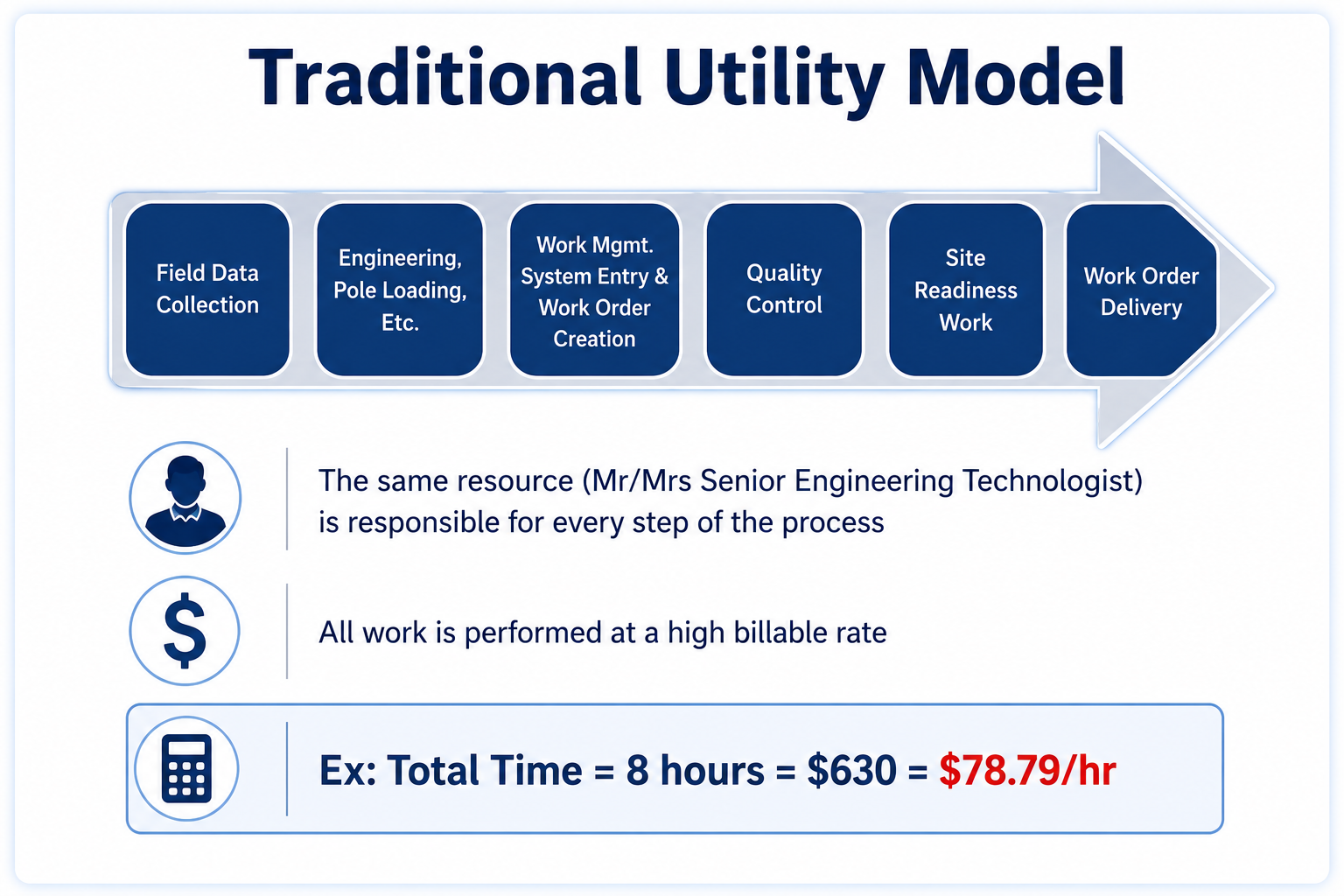
Best when familiarity, direct utility experience, and simple management matter most.

Where it works

  • Easy to understand and manage
  • Works well with highly experienced utility resources
  • Useful when the customer needs direct, familiar support

Watchouts

  • Difficult to staff
  • Premium bill rates
  • Limited value creation for off-site teams
POD Model

Model Deep Dive

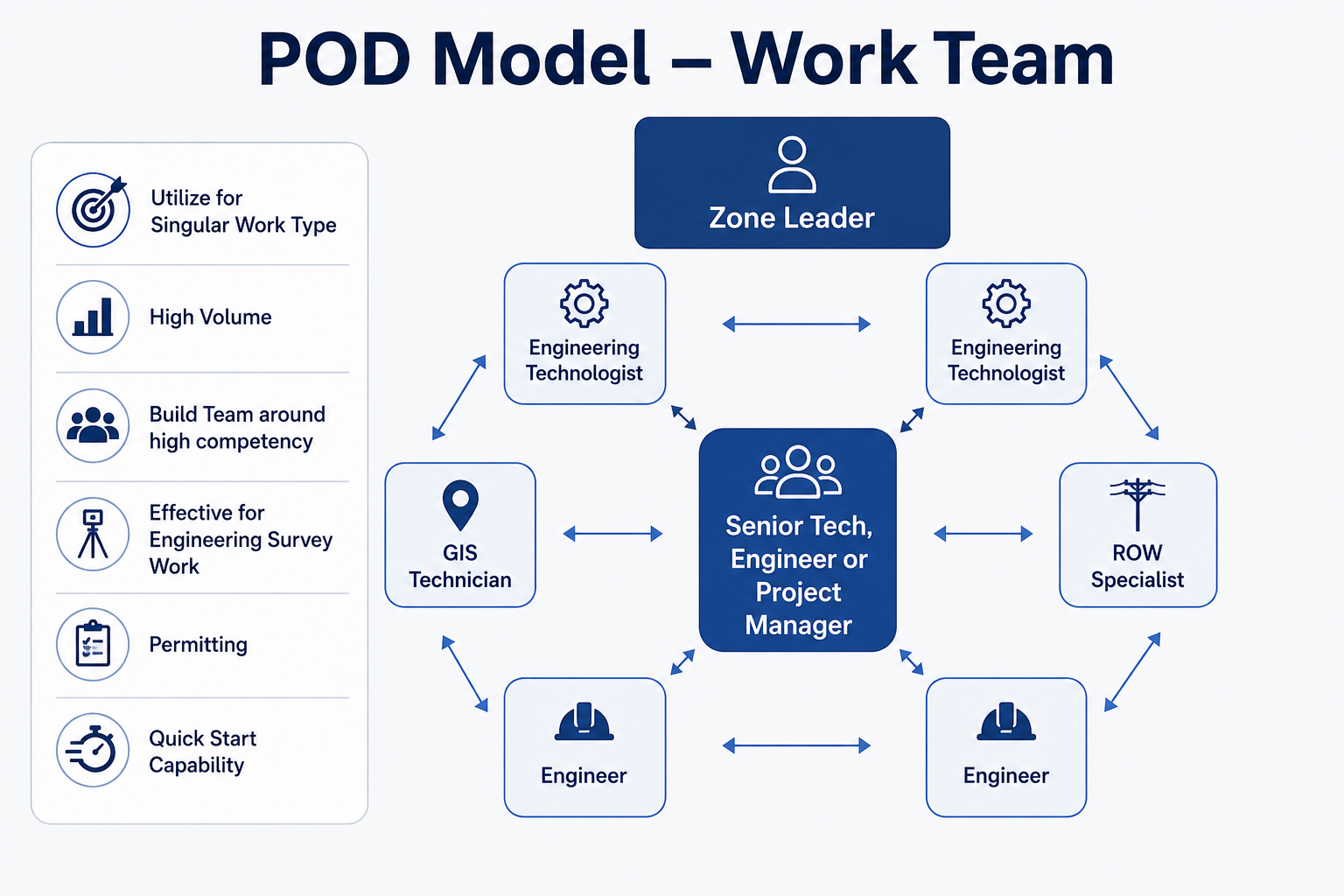
POD Model

Best for singular work types, high volume, and quick-start execution.

Where it works

  • Strong for focused work lanes
  • Can build momentum quickly
  • Effective for engineering survey work and permitting

Watchouts

  • Can become too narrow
  • Requires strong competency in the center of the POD
  • May not scale well across multiple work types without added structure
Hybrid / Off-Premise Model

Model Deep Dive

Hybrid / Off-Premise Model

Best for scalable delivery, lower cost per unit, and higher production with PM discipline.

Where it works

  • Lower cost per work order
  • More scalable resource model
  • Higher production while maintaining quality
  • Supports flexible local and remote execution

Watchouts

  • Requires mature leadership in each lane
  • Needs efficient PM tools and handoffs
  • Can fail if execution, PM, and technical oversight are unclear

Traditional Utility Model

Best for startups and simpler operations

Pros

Easiest to manage
Remote capable
Strong technical competency

Tradeoffs

Difficult staffing
Premium labor costs
Limited scalability

POD Model

Best for growing organizations

Pros

Rapid startup potential
Fast progression
Minimal organizational disruption

Tradeoffs

Optimized for narrow work types
Less scalable long-term

Hybrid Model

Best for scale and operational excellence

Pros

Highly scalable
Lower cost per WO
Higher production capacity
Strong PM integration

Tradeoffs

Requires leadership maturity
Needs strong PM systems
More difficult to manage

Model Selection Tool

Choose the model based on what is actually true.

This is not a perfect formula. It is a practical guide to help leaders determine whether the work is better suited for Traditional, POD, or Hybrid / Off-Premise delivery.

Recommended direction

No clear model yet

Check the signals that are consistently true for the team and client need.

0 of 7 signals checked0%

Operating Model Signals

Organizational Maturity

As organizations mature, the operating model must evolve with leadership capability.

01

Startup

Simpler structures with strong technical resources.

02

Growth

POD systems create momentum and focused execution.

03

Scale

Hybrid zone structures maximize scalability and efficiency.

The operating model should scale with the organization.